
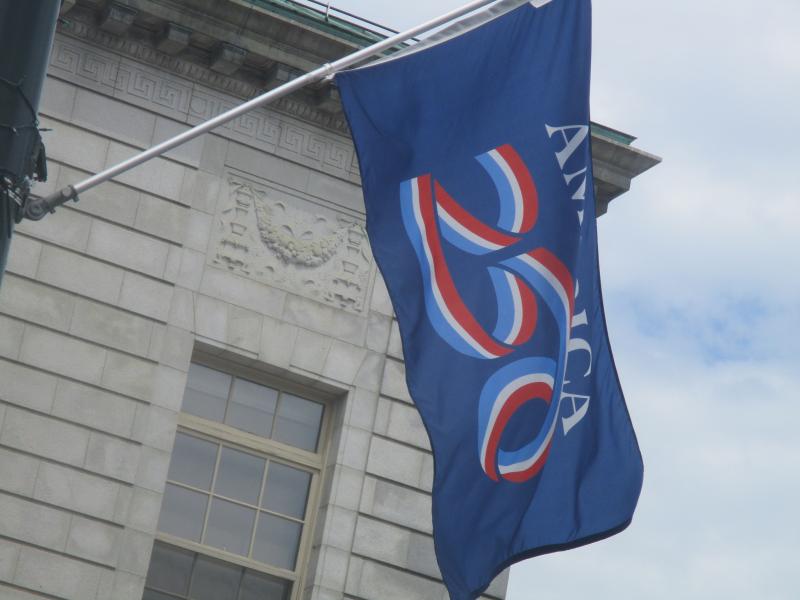
A 250 Years of Independence Flag Flew Over Congress Street, Portland, on July 4, 2026.
Earlier this week, Attorney General Aaron M Frey announced a $45 million multi state settlement with Block, Inc., the company behind the popular peer-to-peer payments app Cash App. The settlement resolved allegations that Block misled consumers about the safety of Cash App, failed to protect users from fraud on the platform and didn’t provide the fraud protection and resolution promised and that was required by law. In short, the company failed to help people when thingw went wrong.
“Cash App recklessly prioritized growth of its business over basic consumer protections, often at the expense of customers who were needlessly left open to fraud,” said Attorney General Aaron M. Frey. “This settlement provides compensation to address customer losses and provides other relief to ensure customers of Cash App are protected.”
Block told Cash App users their money was safe – implying that the app worked like a bank, with the same protections, which wasn’t true. At the same time, Block knew fraud on its platform was rising sharply – and instead of warning users or strengthening protections, it doubled down on marketing.
For years, Block actively promoted direct deposits of paychecks and government benefits into Cash App. It made a particular push to reach unbanked and underbanked consumers – people who would often rely on Cash App as their primary financial account and who were especially vulnerable to fraud. Block grew its user base without making sure it could support those users when problems arose.
As part of the settlement, Maine customers will receive $338,513.06. Block’s policies didn’t just fail to stop fraud — in several ways they made it easier. For example, Block’s sign-up process was designed to be fast and frictionless, with minimal identity verification. That made if easy for fraudsters to create accounts, not just legitimate users. That was one of several examples given in the press released issued earlier this week.
Block’s failure to provide adequate customer service and to fulfill its promise to protect users from fraud had real consequences for real people. Innocent users who experience automated account locks for suspicious transactions were frequently locked out of their accounts for weeks without a way to access their money. Victims of fraud through the app were often left with no recourse because delays made it impossible to get stolen money back from scammers and because Block failed to investigate unauthorized transactions and failed to issue refunds when required by law.
Under the settlement, Block has agreed to implement and maintain responsible practices to resolve these issues, including to:
Maintain customer support that can resolve fraud complaints, account lockouts and other problems; Offer live support 24 hours a day, with a human available by phone a least 13.5 hours a day and by live chat at least 18 hours a day; Stop making false or misleading claims about Cash App’s safety and how it protects users from fraud; Discontinue marketing practices known to increase fraud on the platform; Directly educate consumers about common types of fraud; Fulfill its legal obligations to investigate fraud claims and reimburse users for unauthorized transactions.
The multistate settlement also reaffirms Block’s commitment to distribute between $75 million and $120 million to compensate consumers nationwide as part of a settlement with the CFPB. Oregon and Texas led the investigation, securing for al 46 participating states.